JIEBO Instrument · JIEBO-F1
Surpass F1 Mobile Optical Emission Spectrometer
The Surpass F1 is a cart-mounted mobile spark optical emission spectrometer for on-site reliability testing of metal materials. With a built-in lithium battery and argon cylinder, it brings the analysis to large or fixed components that cannot be cut for the lab — scrap-yard incoming inspection, in-service pipework, reinforcing bars, and oversized castings.
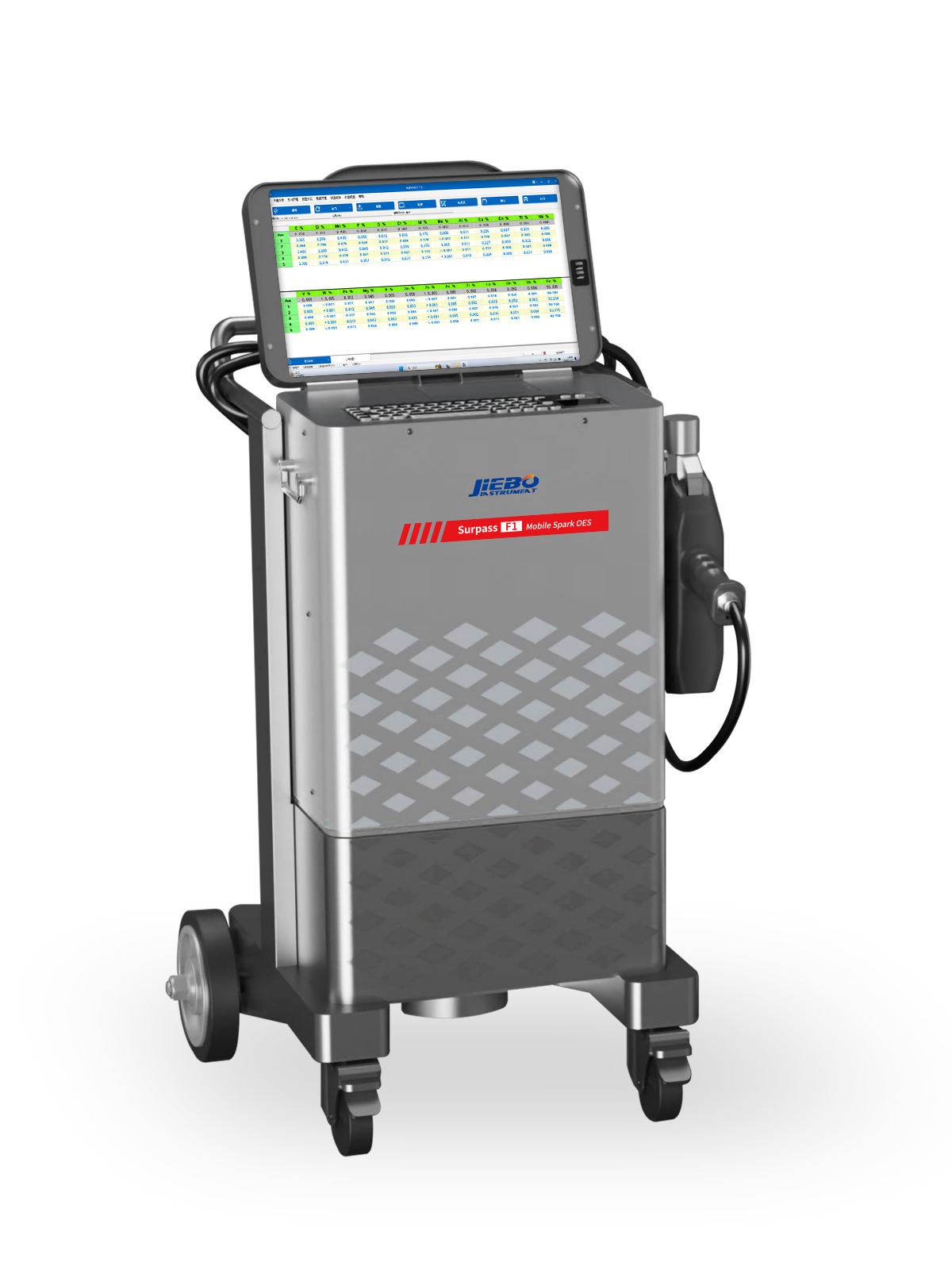
Specifications
| Optical system | Paschen-Runge mounting, modified for portable probe |
|---|---|
| Grating focal length | UV 350 mm + Visible 401 mm (2400 lines/mm both) |
| Chromatic dispersion | 0.7 nm/mm |
| Wavelength range | 160–425 nm |
| UV-region elements | C, P, S, B, As, Sn, Se, N |
| Operating system | Windows 7 / 8 / 10 / 11 |
| Argon purity | ≥ 99.999 % (5N) |
| Operating power | 110 / 230 V, 50 / 60 Hz |
| Battery | Built-in lithium battery, 600 continuous tests wireless |
| Dimensions (L × W × H) | 400 × 280 × 600 mm |
| Weight | 45 kg (incl. battery) |
Typical applications
- Scrap-yard grade sorting — fast incoming inspection of mixed metals
- In-service pipework and pressure vessels — PMI (positive material identification) without cutting
- Reinforcing-bar and structural-steel verification on construction sites
- Large castings, forgings and components that cannot reach the lab
- Field service for OES warranty and calibration follow-up
JIEBO Instrument · Quote desk
Request a formal quote
Send your application details and our engineers will reply with model advice, lead time and pricing.
Other models in this category
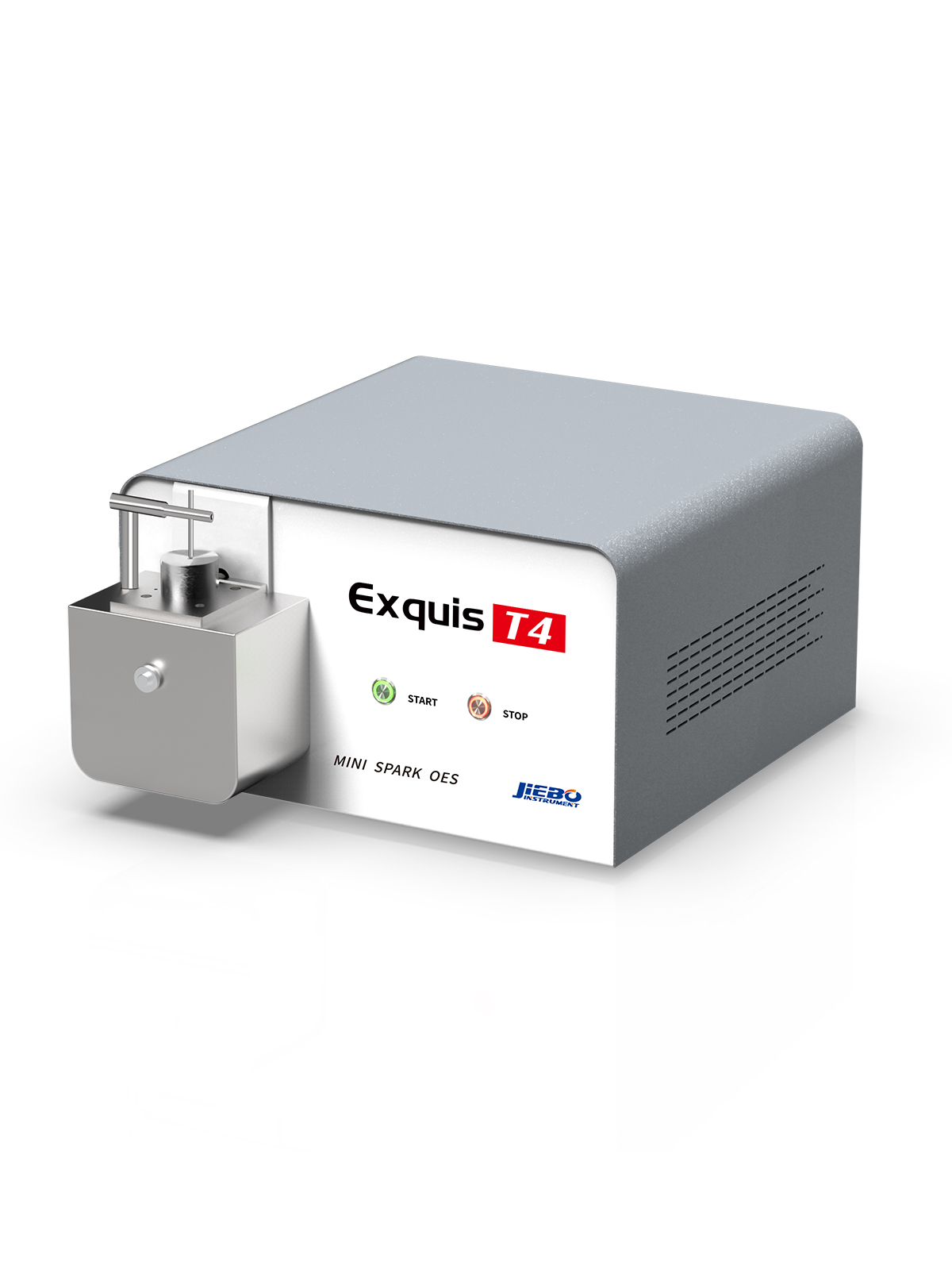
JIEBO · JIEBO-T4
Exquis T4 Optical Emission Spectrometer
The Exquis T4 is a benchtop spark optical emission spectrometer with a sealed-cycle argon optical chamber that reduces gas consumption and s…
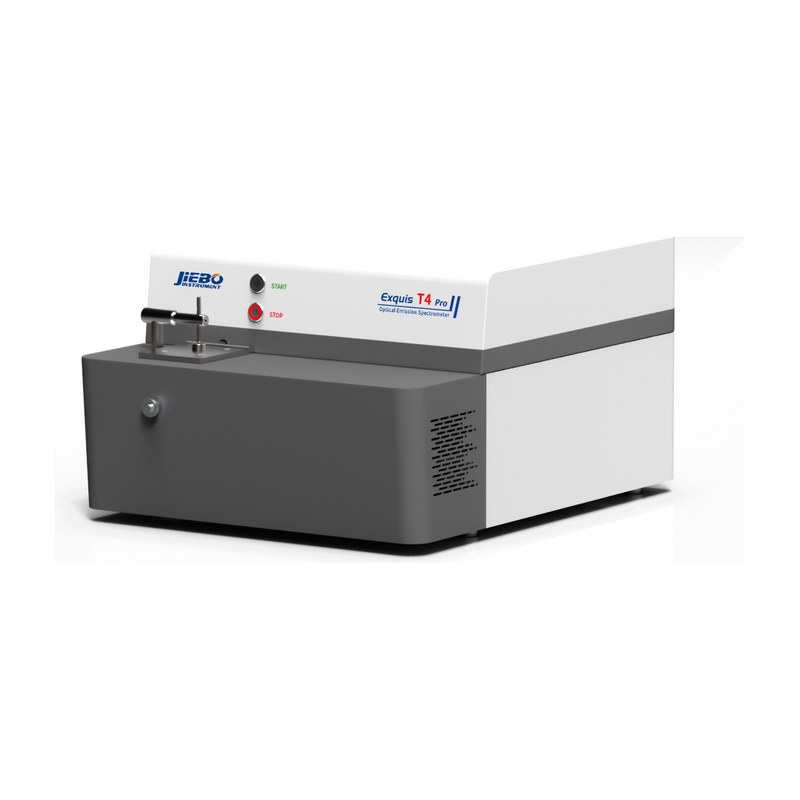
JIEBO · JIEBO-T4-PRO
Exquis T4 Pro Optical Emission Spectrometer
The Exquis T4 Pro is the production mainstay of the T4 series: a benchtop spark OES built around a full-spectrum sealed-cycle argon optical …
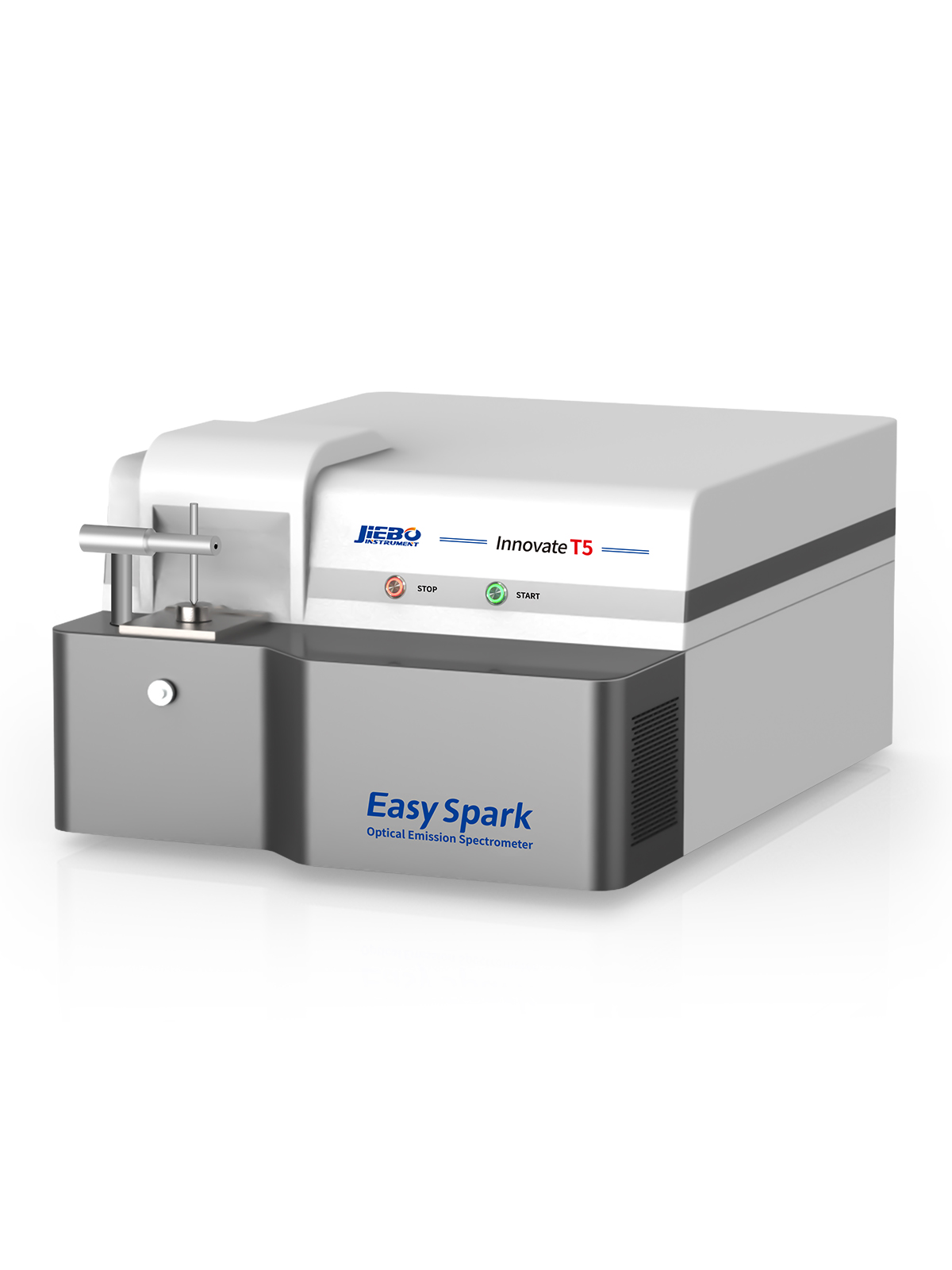
JIEBO · JIEBO-T5
Innovate T5 Optical Emission Spectrometer
The Innovate T5 is a full-spectrum optical emission spectrometer with a vacuum optical chamber and all-digital programmable excitation sourc…
Frequently asked questions
How long can it run on the built-in battery?
Up to 600 continuous tests in wireless mode per charge. Charging time is approximately 3–4 hours for a full cycle.
Does it really measure non-metallic elements on-site?
Yes. The modified UV optics dedicate a 350 mm channel to the UV region for C, P, S, B, As, Sn, Se and N — the elements handheld XRF cannot quantify.
How does Surpass F1 compare to a handheld XRF like the F6000 Pro?
F6000 Pro (XRF) is non-destructive, gun-form, identifies alloy grade fast — but cannot measure carbon. Surpass F1 (mobile OES) is destructive on a small spark mark but does measure C, P, S, B reliably. Use XRF for fast sorting; use F1 when grade certification requires carbon.
What argon flow does field operation require?
Argon 99.999 % (5N) via the built-in cylinder. Optical-chamber cyclic argon filling reduces consumption versus traditional open-flow probes.